November 16, 2026
By Everyone Jiu Jitsu Team
Your First Month of Brazilian Jiu Jitsu in Miami Shores
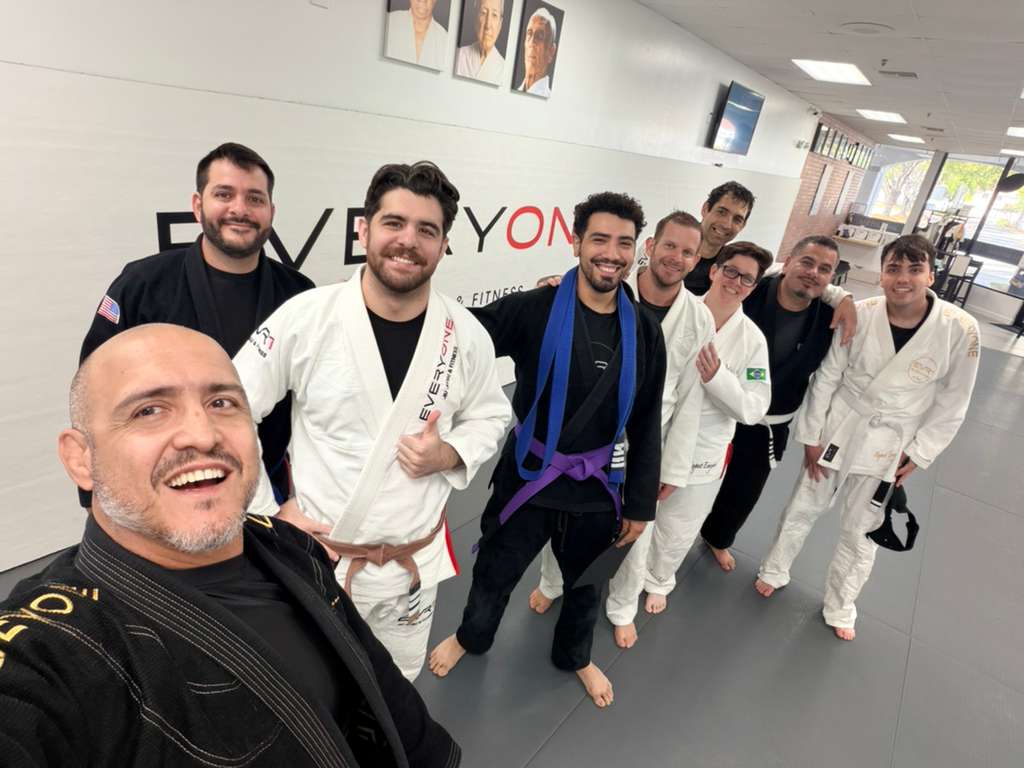
After your first Brazilian Jiu-Jitsu class, you may remember a few movements, several unfamiliar words and the feeling that everyone else knew where to put their hands.
Then comes a different question: what should you focus on when you return?
For an adult beginner, the first month is a chance to become familiar with the room, understand how practice works and decide whether the academy fits your goals. You do not need to measure it by how many techniques you can perform against an experienced partner.
If you are exploring adult BJJ classes in Miami Shores, here are useful things to pay attention to as you begin.
Learn the class process before judging your performance
Knowing where to stand, when to listen and how to ask a question can make the next visit feel less unfamiliar. Those details are part of learning, even when they have little to do with a particular technique.
Ask the instructor how beginners participate in the class and which activities are appropriate for your experience. Before partner practice, make sure you understand the task and the stop signals. If a direction is unclear, ask before starting.
You may need the same explanation more than once. A useful early goal is to recognize what the instructor is asking you to practice, rather than trying to remember every detail from the entire lesson.
Choose a routine you can repeat
A first month built around enthusiasm alone can be difficult to sustain. Look at your actual week, including work, commuting and family responsibilities, before choosing class times.
The Miami Shores schedule is a starting point for finding options. Confirm with the team which sessions are suitable for a new student and how to arrange attendance. Do not assume every session on a timetable has the same entry requirements.
Choose a manageable starting routine with the instructor. There is no universal attendance target that every beginner must reach in four weeks. Consistency should help you learn, not turn the first month into a deadline.
Ask smaller questions during practice
"I don't understand any of this" may describe how you feel, but a specific question gives the instructor a clearer place to help.
Try asking which movement comes first, where your hand should be during the drill or what position you are trying to reach. If your partner moves and you lose track, ask to see that part again.
You can also ask what the exercise is meant to teach. Understanding the purpose of a drill may help you follow the explanation the next time it appears. You are building a vocabulary as well as learning movements.
Treat partner work as shared learning
An unfamiliar partner is another person trying to practice, not a test you have to pass. Introduce yourself and let them know you are new. Follow the instructor's directions about pace, resistance and the activity being practiced.
Understand how to tap and stop immediately when your partner taps or the instructor calls a stop. You can ask to pause or request clarification whenever you need it. Tell the coach if you are uncomfortable or unsure what is happening.
The first month does not require you to prove toughness. It should give you opportunities to learn how to communicate while working with another person.
Notice progress that is easy to overlook
You might recognize the name of a position that sounded unfamiliar last week. You might remember the first step of a drill or feel more comfortable asking the coach to repeat it.
Those are useful observations. They do not promise a particular level of skill after a month, but they give you something more meaningful to track than comparing yourself with a long-time student.
After class, write down one thing you understood and one question for your next visit. Keep it brief. The point is to notice what you are learning, not to create another assignment you feel behind on.
Decide whether the academy fits your goals
At the end of the month, consider your experience as a whole. Were instructions understandable? Could you ask questions? Did your chosen routine fit your week? Did you understand what you were being asked to do with a partner?
Talk with the instructor about your next steps. Your goals may involve learning a new skill, enjoying a regular activity or exploring the sport further. You can read whether you have to compete to train Jiu-Jitsu if tournaments are one of your concerns.
You do not need to settle every long-term goal before beginning. You do need enough information to choose your next step with confidence.
Start at Everyone Jiu Jitsu in Miami Shores
EVR1's BJJ All Levels program is listed for ages 16 and older. The Miami Shores academy is at 8032 NE 2nd Ave. Visit the Miami Shores academy page or call +1 (786) 833-8552 with questions about getting started.
Request your free trial class in Miami Shores and ask the team to confirm an appropriate visit. Your first month can begin with a simple aim: understand a little more each time you return.