November 3, 2026
Is Jiu-Jitsu Safe for Kids? What Every Parent Should Know
A parent can love the idea of Jiu-Jitsu and still have one big question: is it safe for my child?
It is a fair question. In Brazilian Jiu-Jitsu, children work with partners, practice holds and learn how to move when someone else is moving too. That is different from an activity where everyone stays in their own space.
No contact sport is completely risk-free. What matters is how classes are organized, what children are taught about control and whether the adults in charge take safety seriously.
What actually happens in a kids' Jiu-Jitsu class?
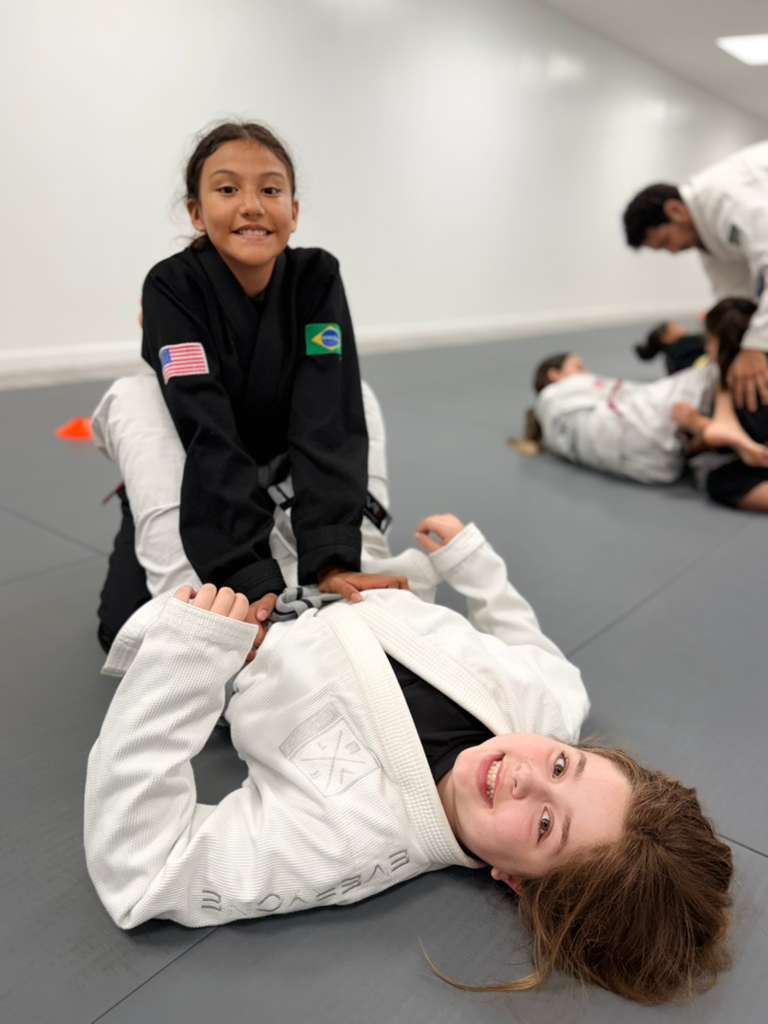
Jiu-Jitsu is a grappling martial art. Instead of focusing on punches and kicks, students learn movements involving balance, positioning, control and escapes. Children also practice listening, waiting their turn and working with a partner.
At Everyone Jiu Jitsu, youth classes are divided into age groups rather than putting every child into one room. Tiny Champs is for ages 3 to 4, Mini Champs for ages 5 to 6, Little Champs for ages 7 to 9, and Juniors & Teens for ages 10 to 15.
That structure matters because a preschooler and a teenager do not learn in the same way. The pace, explanations and expectations need to make sense for the child in front of the coach.
What should parents look for during a class?
Watch the way the instructor speaks to the students. Are directions clear? Does the coach correct unsafe behavior? Do children know when to stop?
In Jiu-Jitsu, students learn to tap when they need a partner to release a hold. They also need to stop as soon as a partner taps or the instructor tells them to stop. Learning to respect that signal is an essential part of training.
Supervision, sensible partner matching and age-appropriate instruction matter. So do clean equipment, good hygiene and a culture where children feel comfortable asking for help.
If something concerns you, ask. A thoughtful coach should welcome reasonable questions about how the class is run.
Does learning self-defense encourage fighting?
That is another question we hear from families considering martial arts.
Learning a technique does not mean a child should use it whenever they feel angry or embarrassed. The way a skill is taught is just as important as the movement itself.
Children can learn that strength comes with responsibility. They can practice controlling their movements and respecting another person's space. They can also learn that walking away, using their voice and asking an adult for help are often better choices than a physical confrontation.
Jiu-Jitsu is not a guarantee that a child will never be bullied or injured. It is one environment where they can practice skills and decisions under adult guidance.
What if my child is nervous about physical contact?
Some children run onto the mat. Others hang back and watch.
Neither reaction tells you whether a child will enjoy Jiu-Jitsu in the long run. New sounds, new rules and unfamiliar movements can take time to feel normal.
Tell the coach if your child is hesitant, sensitive to touch or needs a little more time to settle in. It is better to have that conversation than to push a child to act brave.
After class, ask what they enjoyed and what felt uncomfortable. Listen without turning the experience into a test.
See the class for yourself
The best way to judge whether a program feels right for your family is to visit, meet the instructors and see how the students are guided.
Everyone Jiu Jitsu offers a free introductory class at its Cooper City and Miami Shores academies. You can request a visit, share your child's age and ask the team about safety, class structure and what to expect. A coach will confirm the class time.
Book your child's free trial in [Cooper City](/free-trial/cooper-city) or [Miami Shores](/free-trial/miami-shores) and come see the atmosphere for yourself.