November 18, 2026
By Everyone Jiu Jitsu Team
Why Your Child's Jiu-Jitsu Progress Is Bigger Than It Looks
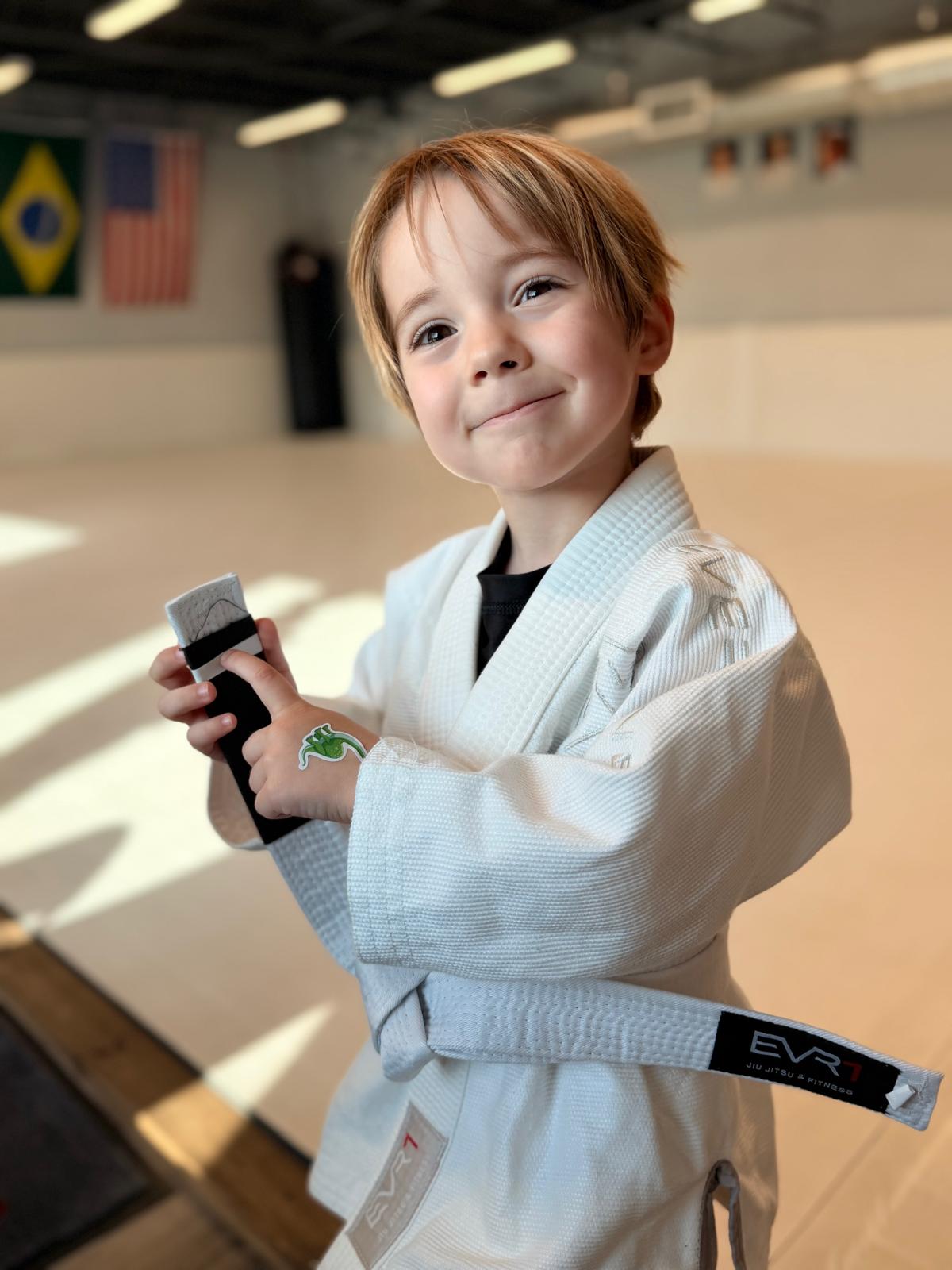
It's a fair question. And it deserves an honest answer.
The short version: jiu-jitsu is one of the few activities where the most important progress happens where you can't see it from the bench. Let's talk about what that progress looks like, why it takes the shape it does, and how jiu-jitsu fits next to the other activities competing for your family's calendar.
Belts are slow on purpose
In many kids' activities, a trophy or a certificate arrives at the end of every season. Jiu-jitsu doesn't work that way, and that's by design.
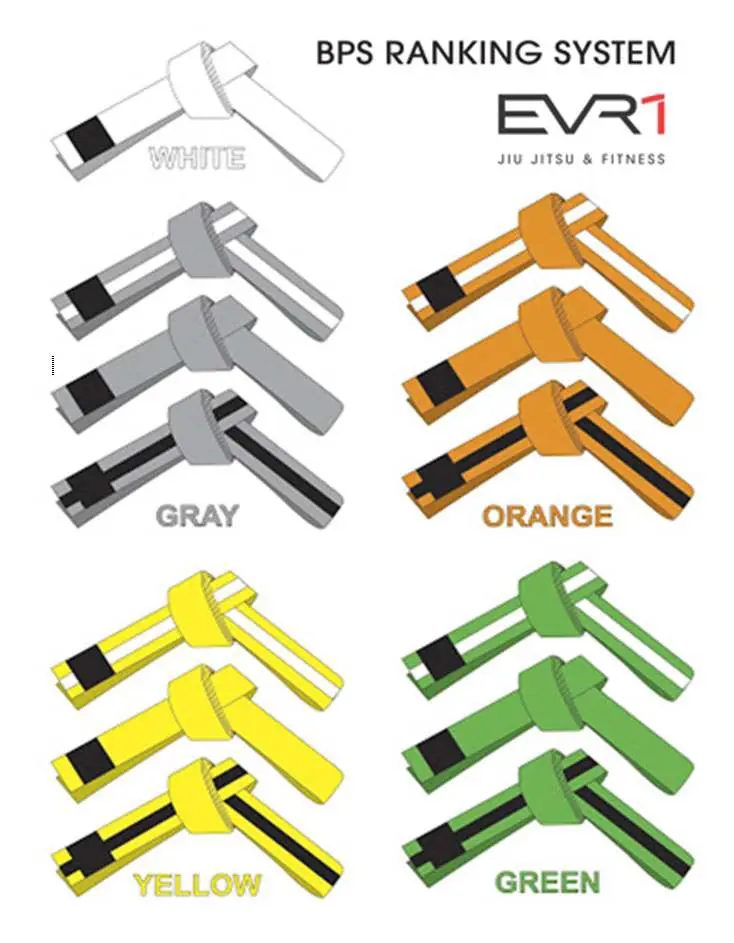
A belt in Brazilian Jiu-Jitsu means something because it's earned over time, through hundreds of hours of practice, mistakes and small breakthroughs. When a child finally ties on a new belt, they know they earned it. That lesson, that real things take time and effort, is one of the most valuable things a child can learn, and it's increasingly rare.
Between belts, your child is earning stripes, learning new positions, and, most importantly, building habits. Progress in jiu-jitsu is rarely a straight line. Kids often hit a plateau where nothing seems to change, and then suddenly everything clicks. That plateau isn't a sign that something's wrong. It's where the learning settles in.
What jiu-jitsu is really building
Technique is the vehicle. The destination is who your child becomes. In every class, our coaches are working on:
- Resilience. Your child gets stuck in a tough position, works to escape, sometimes fails, and tries again. Every single class. That's practice for every hard moment life will bring.
- Confidence that's earned, not given. Kids who know they can handle pressure on the mat carry themselves differently at school, with friends and in new situations.
- Focus and listening. Following multi-step instructions, waiting their turn, and staying engaged for a full class are skills that show up in the classroom.
- Respect and self-control. Bowing in, shaking hands, training safely with partners of different sizes, and knowing when to stop. Jiu-jitsu teaches kids to be strong and kind.
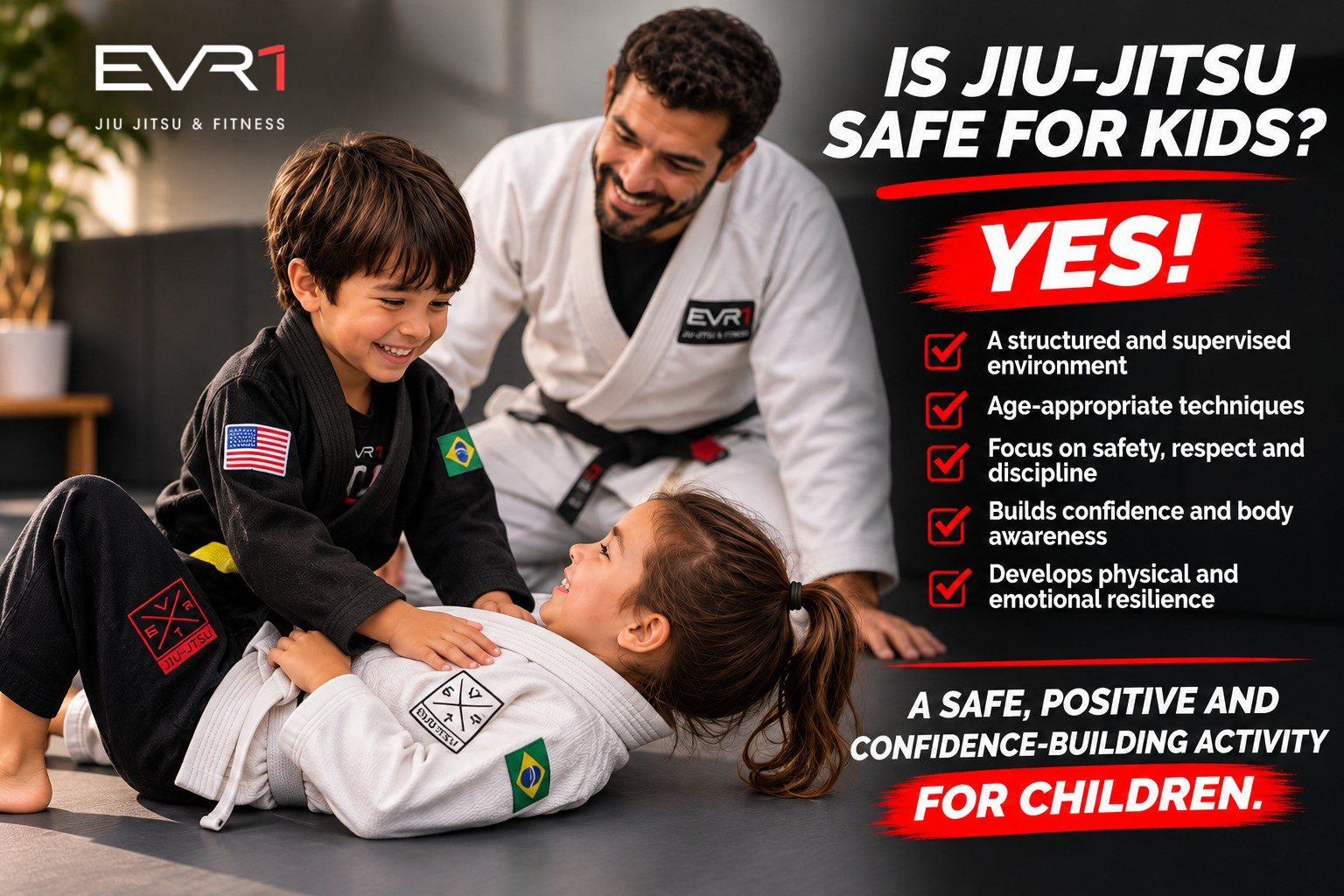
- Bully prevention and real self-protection. Our goal is never to create fighters. It's to create kids who are calm and confident enough that they rarely become targets, and who know how to protect themselves without hurting anyone if they ever need to.
- Body awareness and coordination. Balance, strength, flexibility and spatial awareness that make kids better at every sport they play.
- Problem-solving. Jiu-jitsu is often called "human chess." Kids learn to think under pressure, read a situation and make decisions.
None of these skills shows up on a scoreboard. All of them show up in life.
What's different about year-round training
Seasonal sports can be wonderful. Kids make friends, have fun and get outside, and many volunteer coaches are dedicated parents generously giving their time. We're big fans.
But it's worth understanding how different the two experiences are:
- A season ends; development shouldn't. Most seasonal sports run for a couple of months, then stop. Habits, fitness and focus fade during the off-season, and kids often start over each time. Jiu-jitsu continues all year, so growth keeps compounding.
- Supervision vs. a structured curriculum. Our classes follow a progressive, age-specific curriculum built over more than 20 years of teaching methodology. Every class builds on the last one.
- Professional coaches who know your child. Every mat at Everyone Jiu Jitsu is led by certified black belt instructors with decades of experience, including Professor Luiz Fernandes (4th-degree black belt, 10x Brazilian National Wrestling Champion) and Professor Marcos Escobar (6th-degree black belt). The same coaches see your child week after week, year after year. They notice when your child is struggling, when they're ready for more, and when something's off.
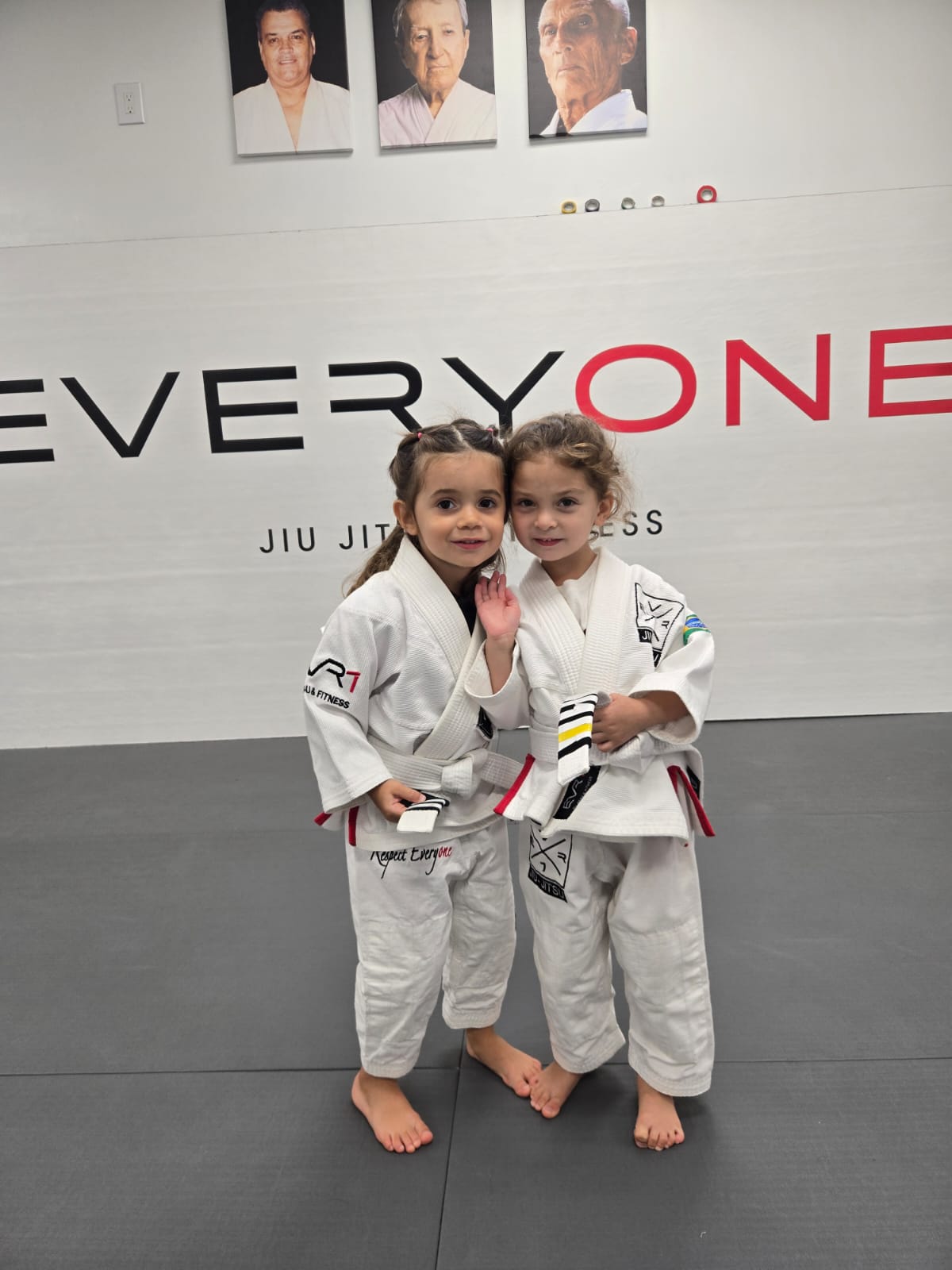
- Classes split by age and stage. From Tiny Champs (3–4) to Juniors & Teens (10–15), kids train with peers at their developmental level, and the lessons grow with them.
You don't have to choose
Here's the good news: this isn't jiu-jitsu or soccer. It's jiu-jitsu and whatever else your child loves.
Think of jiu-jitsu as the foundation, the year-round base that builds strength, coordination, discipline and confidence. Seasonal sports sit on top of that foundation, and kids who train jiu-jitsu often find they're more coordinated, more coachable and more resilient on the field or the court.
If your schedule gets tight during a sports season, talk to us before stepping away. Many families reduce to fewer classes per week during a busy season rather than stopping completely, so their child doesn't lose the momentum they've worked so hard to build.
Signs of progress you can look for at home
Belts tell part of the story. Here's the rest. Over the coming weeks, watch for these:
- Does your child try again after failing, instead of giving up?
- Do they handle frustration or losing a game a little better than before?
- Are they standing taller, making eye contact, or speaking up with adults?
- Do they follow instructions more easily at home or school?
- Are they more aware of their body: better balance, fewer clumsy falls?
- Do they talk about their coaches or teammates?
- Do they show more patience with younger siblings or friends?
If you're nodding at even two or three of these, jiu-jitsu is doing its job.
Let's talk about your child
Every child develops at their own pace, and you know your child best. If you're wondering how they're doing, we'd love to sit down with you. Ask your child's coach for a quick progress conversation after class. We'll share what we're seeing on the mat, where they're growing, and what's coming next.
Jiu-jitsu is for everyone. And it's built for the long run.